


I have been painting with gouache for a while. For beginners, I think the most challenging part is that gouache is so easily lifted and reactive.
My habit of washing my brush by dipping it into water and swirling vigorously didn’t help. The occasional little water drops got spun out of the glass jar and landed on my paper. It happened during my test as well; you can see it in my latest video.
It wasn’t always easy to pick up the water drops and paint over. There are many issues involved:
A) If I didn’t have enough paint, it’s almost impossible to mix the same colour again.
B) I can’t gauge the colour by looking at the dried paint because of the nature of the gouache → value change when it’s dried.
C) When painting over, I risk lifting off the paint around the water drop surrounding area if it’s not completely dry.
Anyway, it’s not an easy task. Making it out of something else is a better way. I made a moon out of an accidental water drop before.
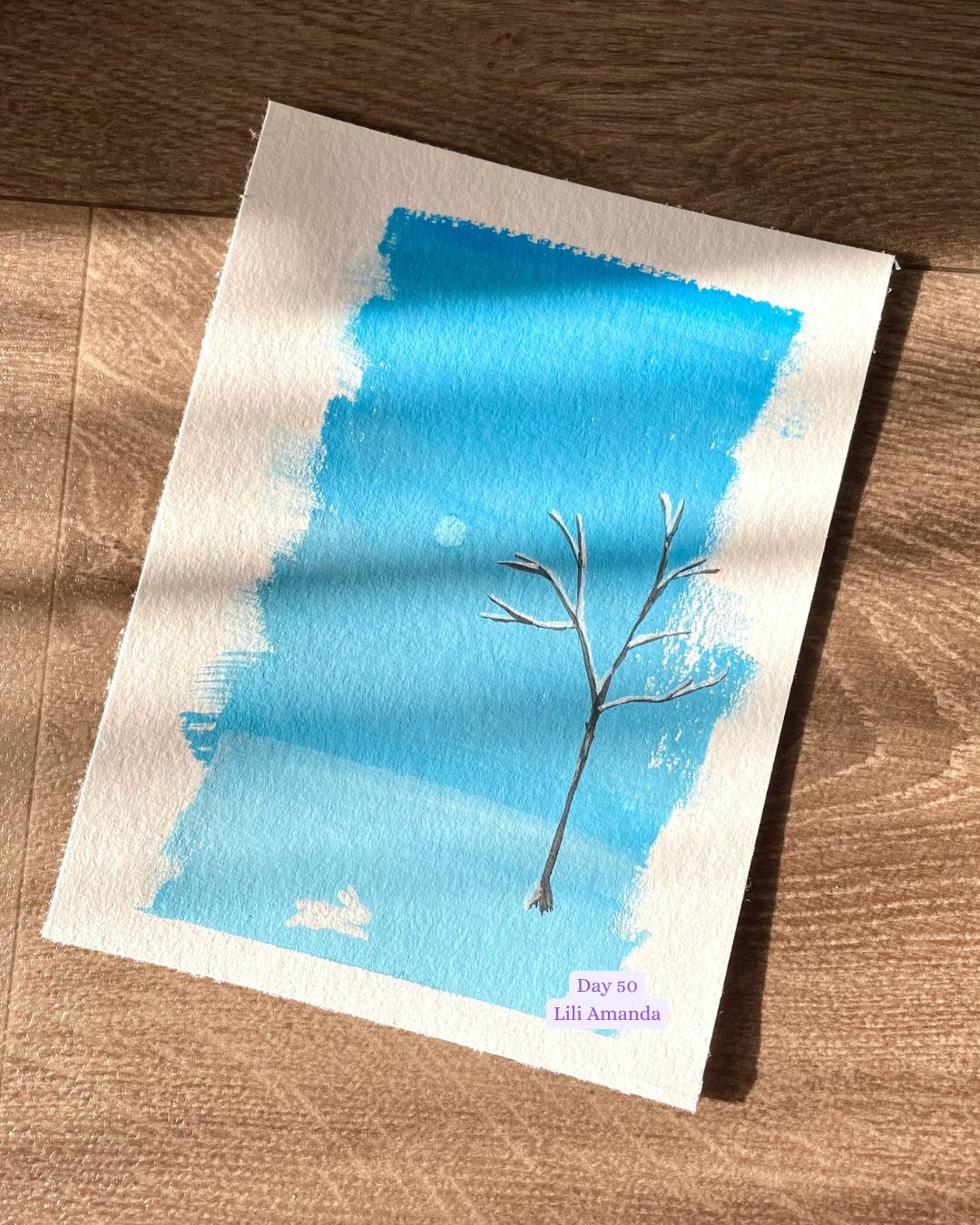
I determined to solve the problem. There must be an easier way to deal with this common problem; I don’t want to have the feeling that I always have to be on tiptoes when painting gouache. I did a lot of research, and in this video I did some experiments based on my research. There are a few more methods that involved acrylic that I didn’t test this time. If one day my current methods don’t satisfy me, I will test out other methods.
In this test, I used 2 different Papers: Clairefontain Aquapad cold pressed 100% cellulose and Baohong Academy Cold Pressed Paper 100% cotton.
Detailed Analysis of Paint Brands including Gouache from Pebeo, Winsor & Newton and Renesans Cover. Watercolour from QOR, Maimeri Blu and Winsor & Newton.
Click Here to Download the result PDF file
Have you encountered the same problem when using gouache or watercolour? Have you got other methods that you can share? Or anything you want to share. Please feel free to leave it in the comment.
Lili Amanda